Media literacy in an Age of Information Overload

Making media literacy great again - Columbia Journalism Review

Like most of the developments of the 20th century, the move from mass media o interactive media was one we undertook without understanding the full implications. We jumped into the latest trend without realizing it was a revolution in how we access, put out and perceive information.

Social media has, to a large extent democratized content and before we realized it, this led to an information overload. The shocking “whatsapp lynching”s of 2018 woke India to the dangers of fake news and made us a bit more conscious of the source of information. Advertisements on tv and newspapers reminded people to not trust forwarded messages and information on social media. One could argue that this was a first step towards media literacy.

However, even the campaign could not stop the circulation of fake news on whatsapp. Over the last week, I have personally come across a video of a Muslim fruit seller licking his fruits with the caption that he was spotted doing so after the outbreak of the pandemic and a video of “three generations” of a Russian family performing an gymnastics routine together. A simple google search revealed both to be untrue. While the use of an old video to incite panic amidst the pandemic was done to increase communal tensions, why someone would go through the pain of creating the ridiculous backstory for the gymnastics performance is beyond my comprehension. Be that as it may, the sheer number of people in India, and the different levels of education makes it impossible for mass education campaigns such as these to succeed.

Moreover, whatsapp advocated getting your news from reliable sources which included newspapers and television. The obvious problem with this was that newspapers and television channels often aren’t too particular about the source of their news themselves. The rush to cover all the latest pieces of news often leaves newspapers and news channel without sufficient time to fact-check. While sometimes these are honest mistakes which are clarified by the editor as soon as possible, there are times when unconfirmed “juicy news” is broadcast simply to grab eyeballs.

Republic TV, notorious for its sensational debates, broadcasts and exposes famously attacked Arundhuti Roy caliming that she had said “70 lakh Indian soldiers cannot defeat Azadi gang in Kashmir” . CNN News 18 was quick to jump on to this bandwagon, broadcasting debates about the same. It was later found out that this comment originated in a Pakistani website called timesofislamabad.com and was circulated by a number of fake news websites including Postcard news. While digital news site Newslaundry published a formal apology after Wire exposed that the news was false, there was no apology from the TV channels.

Thus believing “reliable” news sources without fact checking does not constitute media literacy. Despite what Whatapp claimed in its campaigns, not all news channels and news papers are equally reliable. Republic TV might have made a bad name for itself but even the most reliable of news organisations do mistakes.

Thus, now more than ever it is important that we learn how to navigate media. Media scholars refer to this skill as Media Literacy. We must be able to access, utilize, analyse, evaluate and create using all forms of communication. A large part of this in today’s context is to understand that each content creator has his or her own motive for creating the piece of context. Being media literate means being aware and discerning of the purpose for which content has been created.

Following this logic it is easy to discern that a piece of news in a leftist or rightist channel will have an inherent bias. Similarly, it is easy to teach the tech savvy younger generations to be wear to content when they can neither discern who the creator is or what his motive was. However, a person may still not be media literate enough to understand if a news piece is fake. For instance, only people who understand the public relations industry may be able to realize that features about certain movies or human interest stories which feature a brand may have been created by a PR agency.

It is a well known secret that the media industry does not want its audience to be truly media literate. But if one wants to educate himself on the subject, one would have to undertake a detailed study of media organisations as well as all the invisible forces that influence them, be it the political party funding it, the mysterious “expert” quoted in the newspaper or the Publicist who organises the movie launch you read about.

But the irony of the situation is that even such a person who makes it his or her duty to study the media industry, will not be immune to the forces of media. No matter how careful we are, constantly being bombarded by information on social media, news sites, YouTube, as well as our interactions with our peers not only makes it impossible for us to fact check every piece of information we receive, it also makes it more likely that we confuse pieces of information that we come across. As such one may subconsciously associate an unverified picture they see online with a verified piece of news.

Recently, a number of people began to associate a Hindu article about rising Covid cases in Pune with a video of a mock drill conducted there. This led to wide spread panic. Even those who are most well versed with how the industry functions are not able to actively analyse every piece information that they come accross.

As such I do not believe it is possible to be media literate in the true sense of the word. What matters is the degree to which we are informed and can discern for ourselves.

Yellow Journalism for Justice?

Yellow Journalism – A War of Words | Denver Post Yourhub Nextgen

Yesterday, I watched 2 movies, No One Killed Jessica and Peepli [Live]. Both, show two sides of the same coin, yellow journalism. In No One Killed Jessica, NDTV anchor Meera Gaiti resorts to breaking journalistic ethics when Jessica Laal’s murderer goes unpunished. She uses investigative journalism to bring the issue to public notice creating an uproar years after her murder. In Peepli [Live], written by a NDTV journalist, the media’s obsession with Natha, turns one man’s mistaken notion that committing suicide will bring money to his family into a political game that pressurizes him to commit suicide.

Both movies show how both a common man (or woman’s) life as well as death can be consumed by Media Activism. Both Natha and the late Jessica unwittingly become pawns of a larger game. Both movies show the pressure on journalists often succumb to the pressure of TRP. Peepli Live exposes this side of journalism laying the corruption bare and showing even how the best journalists are ultimately professionals who care more about career than justice. No One Killed Jessica only hints at this side of journalism while showing Meera in the light of an activist fighting for Justice.

The media as the fourth pillar of democracy, undoubtedly has the power to point out where justice hasn’t been served. It may present such cases in the court of public opinion, as Meera does. However, Peepli Live points out the dangers of getting too obsessed with one story. While the Cameras were busy following Natha, his fellow villager starved to death unnoticed by the swarm of media personal present in the village. No One Killed Jessica’s version of NDTV seems to be completely free from the clutches of politics. In a world where, as Meera herself points, political power means everything, this is rather unlikely.

In most democracies Media and Politics has a symbiotic relationship. It is true that the government and ruling parties as well as politicians exert some amount of control over the media though sedation laws, bribes and in some cases outright treats. But equally true is the fact that media profits off politics. This came to the forefront when TV channels were shown to be giving Modi more screen time before the 2018 elections, no matter whether the news criticized him or praised him. This was solely done since the TRP proved that showing the PM on TV ensured fewer people would change channels.

Peepli [Live] is a satire, but it isnt far off when it points this out. Even the most “neutral” tv channels politicize the most unpolitical of issues, pitting political parties against each other and creating debates to push up TRP. “Official” Congress and BJP bites of random MLAs who do not understand the issue are often prioritized over bites of the actual stake holder and experts.

The most ridiculous example of this in recent time is of-course how the brutal death of a pregnant elephant in Kerala was turned into a Hindu-Muslim issue by a certain political leader who wrongly assumed this happened in a Muslim majority Taluk. None of the reports of the incident even touched upon the fear of wild elephants ruining their crops that must have induced such an inhumane action. No one was concerned about the forest department’s duty to ensure that such wild elephants are safely removed from these areas and taken back to the forests. Peepli [Live] does a brilliant job of portraying this sad truth by showing how the media personals attract a circus outside Natha’s house. While Natha fights the political pressure and the pressure from his family to commit suicide, a tightrope walker, gracefully makes her was across a thin rope as Indian Ocean’s rustic music speaks of a riot of (political?) colours.

Most people I have spoken to look at media laws in a negative light. The overwhelming number of defamation cases filed against any media house that dares to criticize a person in a position of power shows how the law too has been integrated into this media circus. However, India’s backdated, often manipulated legal system provides some degree of respite from the exclusive-hungry sensationalist media. No One Killed Jessica shows a number of sting operations. The court is strictly against such invasion of privacy. While this often prevents useful pieces of evidence such as the, Sunanda Pushkar tapes, from being used in court, it also safeguards the right of people from vulnerable communities. In the Anandi case, a legal team was able to step in when a Kannada news channel decided to do a sting operation on trans women from a hijra community. The channel decided to “expose” their way of life without understanding the complexities of social pressure on them. The channel also started spreading lies about how the hijra community kidnaps children and forces them to undergo castration. The law provided a framework to stop the spread of such blatant lies and helped protect the community from the spread of hate speech through media.

The reason why the media’s habit of “adding masala” (I believe that’s an official term) to sell a piece of news is so harmful lies in how society reacts to it. The Anandi sting operations in Karnataka led to widespread terror, people began attacking the transgender community since they were scared that transwomen would kidnap their children. Media induced lynching is not uncommon in India. In the current situation, both Covid 19 and strained India China relationships have made the Indian populace weary of the Chinese. This of course includes ethnically Chinese Indians as well as any Indian who has any mongoloid features irrespective of whether they are Indian nationals of indigenous north eastern groups. The misinformed vigilantes of India have once again taken to the streets in their efforts to rid India of the virus by attacking ethnic and religious minorities in the country.

In the movie No One killed Jessica, the sensationalisation of the case led to mass protests which were instrumental in re opening Jessica Laal’s case and getting Justice for Jessica. However, this was done by appealing to the sentimentality of the masses. The history of Indian media has proved that very same tactic when used for a different cause can easily result in inciting violence.

How Covid 19 impacted Media Vehicles in India

Television

Initially the Covid 19 pandemic resulted in a spike in tv viewership. However, this was short lived. As TV channels started recasting old episodes, the viewership plummeted. Doordarshan, however was able to bypass this by showing popular serials from the 90s such as Ramayana and Mahabharata on their channel.

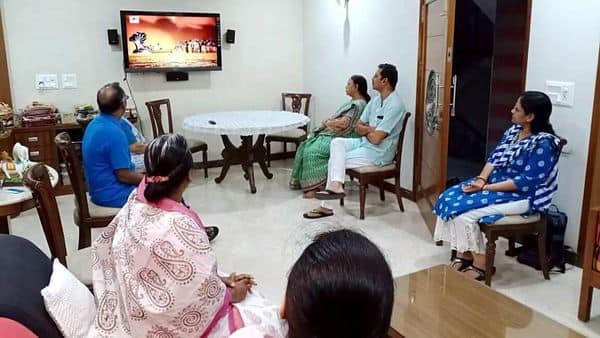
What India is watching during the Covid-19 lockdown

Radio

Surprisingly, the radio which is often thought to me a dying medium has been going strong in India spite of the pandemic. The radio has emerged as the second most credible source of information during the Corona Virus pandemic, surpassed only by the Internet. 82% people have been tuning into radio during the Covd 19 according to AZ research PPL.

Film and Video

Film and Video production suffered a major hit during the lock down. However, production work has started again since Unlock Phase 1 began. Movie halls still continue to remain shut and movies have to be screened either on the television or on OOT platforms. Needless to say this has resulted in a decrease in profit margins.

Impact of the COVID-19 pandemic on cinema - Wikipedia

Print

The Covid 19 impacted the Print medium harder and more directly than any other forms of media. The fear of contacting the virus straight from the paper which came from outside resulted in a sharp fall in readership.

According to a wire article print orders of two major newspapers decreased from 14 lakh to one lakh after the virus hit. Several smaller papers affected by the same problem announced salary cuts, wire alleges.

Hindustan Times was forces to launch a campaign to assure readers that their newspapers were safe to read.

We spread news, not Covid-19 - india news - Hindustan Times

Electronic

Electronic media has been experiencing a boom ever since the virus struck. With people spending more time indoor, more people turn to oot platforms as a form of entertainment. Furthermore, as the popularity of online shopping reaches new heights, E media advertising, that takes consumer right to the shopping sites with just one click, rise in popularity.

Outdoor

Outdoor advertising has proved to be an unfeasible option since people seldom step out of their houses. As such most companies have chosen not to invest in Outdoor advertising at least in India.

However, as India moves into unlock two, companies might begin to invest in ads that remind people to maintain physical distancing and only go out when necessary,

Coca-Cola Uses Times Square Billboard to Encourage Social Distancing |  LBBOnline

Mobile

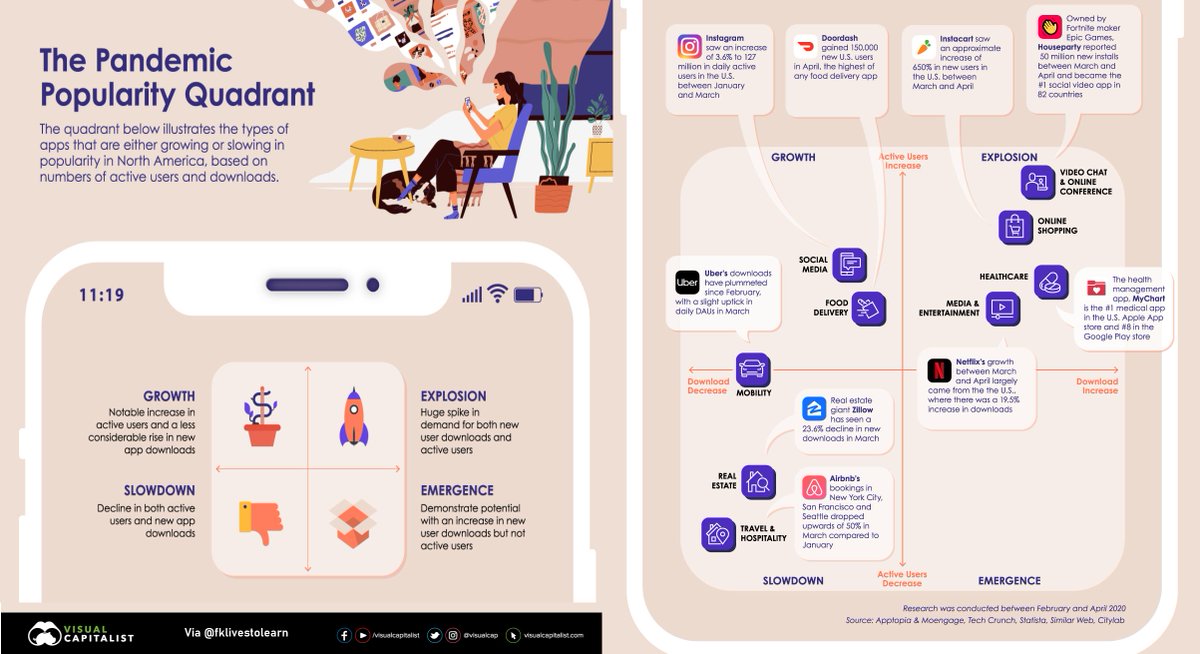
When it comes to apps, changing behavioral patterns has led to a shift in the kind of apps that are popular. The Virtual Capitalist did a great job of explaining this with their Pandemic Popularity Quadrant. As shown in the image below, travel and mobility apps became less popular while apps related to entertainment, connectivity and e shopping grew in popularity as people are stuck at home.

Faisal Khan on Twitter: "The #pandemic popularity quadrant - #future #tech  #business #Apps @efipm @kashthefuturist @DioFavatas @gvalan @DrFerdowsi  @junjudapi @digitalcloudgal @YuHelenYu @enricomolinari @avrohomg  @DigitalFawad @JGrobicki @kuriharan ...

https://www.hindustantimes.com/india-news/radio-stations-spread-positivity-during-times-of-covid-19-with-light-twitter-banter/story-YG55ZasEvbK8z0hSKeCO8H.html

https://thewire.in/media/print-newspapers-coronavirus-salaries

The Impact of Covid 19 on Media

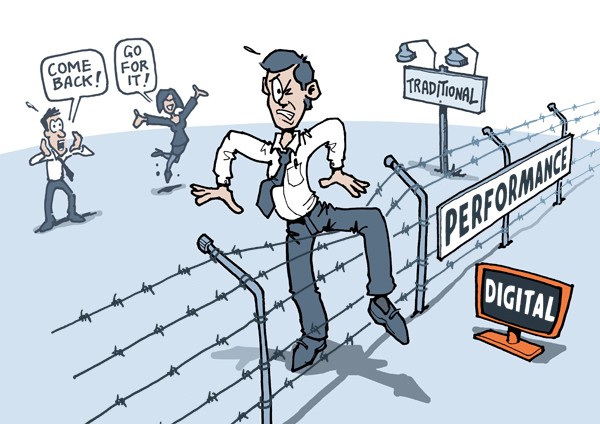
Avoid the traditional to digital marketing transition trap

One doesn’t have to be an economist to realize that the Covid 19 is bad news for all industries. But when it comes to the media industry statistics seem to be telling a different story.

Media, at least traditional media, doesn’t solely depend on the purchase decision of its consumers. Instead, it’s revenue comes from a complex system that involves advertisers, consumers (the audience), operators and media owners. As such to evaluate the effect of Covid 19, we must consider the impact on each of these.

The Audience, being barred from all sources of outdoor entertainment have begun to spend more time watching television, OOT platforms and social media. However, with more time on hand, the audience demands new content and all forms of media haven’t been able to meet these demands amidst the Pandemic.

According to an Economic Times report, there was a steady increase in TV viewership in the first 5 weeks of the lock-down. But as, television channels grew out of pre-produced content to air and began repeat episodes, the viewer ship fell, resulting in a 46% drop in ratings for national broadcasters in May.1 Duradarshan, however, emerged as the most watched channel amidst the Covid19 fear.

On the other hand, with theaters closed, several new movies such as What are the Odds, Bulbul and Gulabo Sitabo have been premiered on OTT platforms. As such, people have been spending more time on OOT platforms during quarantine.

Advertisers in the covid ridden world suffered a large loss towards beginning of the year as out door advertisements they had invested in became completely useless. Hit by the effects of a slowing economy, 69% brands have had to reduce their advertising budget.2 However, some have realized the need for an even more aggressive advertising policy during this time. Brands have particularly turned to advertising promotional offers. Full page newspaper ads and online ads have been as popular as before the pandemic.

The owners of TV channels must bear the brunt of the lower viewership and falling advertisement revenue. On the other hand owners of OOT platforms continue to attract more subscriptions, revenues and advertisements with their fresh content and higher ROI for advertisements.

However, this is not the story of how Netflix, Hotstar and Amazon Prime push good old fashioned Cable TV into becoming obsolete. As far as India is concerned, we have a long way to go before the internet can come close to replacing the TV.

Instead, the peak OOT platforms are experiencing at the moment, is simply a reflection of what the Television experienced a few weeks into the lock-down. With production processes being restricted by safety standards and budget cuts, it is only a matter of time before these sites run out of fresh content.

The operators, must find a way to deal with the crisis. Production can not be done online and budget cuts from the owner’s restrict their resources further. They have been hit from all sides.

In order to survive the pandemic the media industry must innovate. Netflix has started promoting independent film makers producing films from home. If the media industry had to survive in India, it must take a hint from these independent film makers and start producing content that appeals to the masses, from home.

1 https://economictimes.indiatimes.com/industry/media/entertainment/media/after-5-weeks-of-steady-gains-tv-viewership-declines/articleshow/75478569.cms?from=mdr

2

https://influencermarketinghub.com/coronavirus-marketing-ad-spend-report/

The Seekers of Truth

ArtStation - Byomkesh Baksi, Anisul Islam Samir

In my last few blogs I have spoken about some of the finest detectives from the world of crime fiction, comparing their styles of investigation to research methodology. Today I’ll be leaning into my Bengali lineage and talking about Sherlock’s Bengali counterpart Byomkesh Bakshi.

Mr. Bakshi doesn’t like to call himself a detective, he’d rather be addressed by his self given title Satyanwenshi (lit: the seeker of truth). True to this title he doesn’t simply detect the truth but goes out in search of it in the first Byomkesh Bakshi story.

Byomkesh approaches the police to help solve the mystery of a series of murders in China Town, Kolkata. He then goes under cover and takes up residence at a mess known as Anukul Messunder , under the alias of the poor unemployed Atul Chandra Mitra. He shares his room with Ajit Bandyapadyay, a young writer. The murderer seems to be closer to home than Bakshi expected as one of the residents of the mess is murdered in-spite of the gate of the hostel being closed.

Byomkesh has his suspicions based on the facts of the case known to him, he has overheard a conversation between the victim and the owner of the mess just a few hours before the murder. He has analysed the change in expression on the face of his suspect as he mentioned a 1000 rupee note found in the pocket of one of the victims. He has noticed that though this man is a homeopath, most of his medicines are imported. He has pieced this information in with the suspect’s reaction to the policemen and is sure of his deduction.

However, he refuses to act without evidence. He lays out a trap for the murderer, luring him into his room and putting his own life in danger. He later confesses to Atul that though he was certain about who killed their neighbour, he had no way to prove it and thus had to catch the killer in the act. Byomkesh waits in a corner of the room till the killer attacks his dummy and then pounces on him while calling in the police at the same time.

The impact of the investigation is quite clear, with the killer convicted for attempting to murder Byomkesh himself, not even the best lawyer can change the fate of this murderer.

Sword | Free Vectors, Stock Photos & PSD

In a country like India, Byomkesh’s methodological research perhaps only finds its place in the world of fiction. The film Talvar, inspired by the Arushi Talvar murder case paints a more realistic picture of the method of investigation in our country.

When 14 year old Shruti Tandon is found dead, the police force react exactly how they are not supposed to. Instead of sealing the area off, the police enter it in large numbers along with hoardes of journalists effectively destroying all physical evidence.

The police conclude that it was a case of honour killing, based on pure conjecture and the parents are arrested. The case is actually investigated only when this decision causes a public unrest.

Joint Director Ashwin Kumar steps in to solve the case, however his investigation techniques involve use of psychoactive drugs and are thus not taken into account during the court case. Such tests maybe useful in providing detectives with a lead and helping them form their own deductions, however, to convict someone of murder, the court requires hard evidence. As such even though his narco tests point to the innocence of Mr and Mrs Tandon, they can not be acquitted. Ashwin Kumar’s conclusions about the case ultimately have no impact.

However, comparing Ashwin Kumar to Byomkesh Bokshi is rather unfair. The film Talvar also make use of the Roshomon effect to show the complexities of a real world murder case. The board of investigation changes and the new detective in charge has a completely new theory on the murder. As the two detectives tell their versions to the CID chief, the chief declares that the evidence is inconclusive. Again, this conclusion (or lack of it) has no real impact as the court decrees the parents guilty.

The plot of Talvar follows the real incident of Arushi Talvar’s murder closely, leaving the audience asking, how the police can be trusted if they themselves ruined all evidence that could point towards the real murderer. The narco tests were actually conducted yet, never followed up. Avirook Sen in his book Aarushi: Anatomy of a Murder claimed that the interviews provided enough evidence to convict Krishna and Rajkumar and acquit Arushi’s parents. However, there are also counter claims that the Narco Tests further prove the parent’s guilt. The truth of course remains elusive.

In real life, seekers of truth are a rare species, only a handful of people are able to continue in the path towards the answer in spite of the hurdles life throws at them. Researchers are among these rare creatures. Even in the present day and age they can not rest easy till they get to the bottom of the issue. Funds being cut, their careers put at stake, death threats and trolls, nothing can keep them away from the truth. They are the unsung Sherlocks, Bokshis and Poirots of the real world.

https://www.thequint.com/news/india/the-curious-case-of-narco-tests-in-aarushi-hemraj-murder-mystery

https://www.dailypioneer.com/2013/page1/nupur-confessed-to-golf-club-as-weapon-in-narco-analysis.html

Rope

Rope PNG images free download

A few years ago I volunteered to help out on a project to collect oral stories about the partition in Bengal. My work was laid out for me and the questionnaires were prepared, we attended a briefing, did an online course and cleared an exam. But none of us expected what we found when we started our work.

The word ‘research’ is so often associated with science people tend to forget that it isn’t always scientific. Research simply means delving deeper and supporting your claim with evidence. The evidence may or may not be in the form of data. In behavioral sciences, the data collected from observations can not simply be put down as ones and zeros. Instead one must understand individual responses and observe patterns that begin to emerge and this is only possible through Interviews and Focused group discussions.

Interviewing is one of the most essential methods of collecting data in behavioral sciences. However, it is also one of the most difficult and unpredictable methods. In order to carry out a successful interview one must make the subject feel at ease, they must feel like they are simply sharing their opinions and stories with a friend. They must not feel threatened at any point. However, building up such an atmosphere often makes the subject feel too at ease and they begin to digress.

As such what is absolutely essential to carry out a successful interview is to let the subject feel they are simply engaging in a casual conversation while remembering that your sole mission is to find an answer. In the movie Rupert masters this delicate balance by allowing the boys to go on and share their stories giving them a false sense of control till one of them slipped. Rupert also has the keen ear of a researcher, he observes when their stories do not line up and follows up on his suspicion. He asks them suggestive questions but never once asks them if they killed their friend directly till he is sure. He draws out the truth by asking intelligent questions.

Research- A frame of mind

Fyodor Smirnov. Summer as Seen Through a Moldavian Window. 1955 ...

It is often said that a photographer’s eye captures what others can not see. In the Alfred Hitchcock’c critically acclaimed movie Rear Window, wheelchair bound photographer, Jeff does more than just that. His keen eyes are trained to pick out the unusual and so he does. But in order to understand what’s going on, he must go a step further. Noticing isn’t enough, he must observe. He must take note of the isolated unusual events in his neighborhood and understand how they are linked, a dog being slaughtered, a woman screaming and mysterious vehicles that appear in the night.

In the movie Jeff unearths Manhattan’s darkest secret without ever having to leave his home. Jeff is able to do this because he has the astute eye of a photographer and the curious mind of a researcher. He is driven by the need to make sense of the world and hence, he doesn’t just see, he observes.

Personally, I find patterns in history fascinating, the subject to me has always been about observing these patterns to understand the world. What pushes people to war? What makes a dictator, a ruler, a politician unpopular? What makes people Xenophobic and what makes them accepting? If you look through history you will see the answers are the same over and over again. We like to think that the Holocaust has never been repeated but that is one of the biggest lies we keep telling ourselves, just ask Rwandans , the Bosnian, Uighurs and Rohingyans. We are living in a world which has run out of new stories and the same ones are being played on loop, the only way to stop it is observe the patterns and understand them.

But it is not just history that keeps repeating itself, we do too. Each of us have behavioral patterns. We tend to behave the same way every time we feel threatened, under pressure, cared for or angry. In real life I believe the most important kind of research, is looking into yourself, understanding your patterns and your behavior. Like Jeff all of us need to look at the absurd unusual things going on and make sense of them, but unlike Jeff who looked out of the window we must look in. We must observe and collect evidence and once we truly understand what makes us do the little odd things we do.

A few years ago I observed that when I felt stressed my first instinct was to withdraw from the situation. I fond something to do that was completely unrelated to what was expected from me. Absurd as it sounds, I have spent days at an end painting or doing math without eating, drinking water or even budging from my table simply because no one expected me to paint or excel at math, simply because I did not want to deal with the real crisis in my life. Realizing this has changed the way I handle crisis. I still find myself withdrawing to completely unrelated hobbies when I am stressed, but I have learnt to not let them take over my life. Instead I have learnt to use them as short breaks to recharge so that I am able to deal with life better.

We can only truly understand something when we stop noting and start observing. Research isn’t about writing long academic papers, sounding sophisticated and using jargon. It is simply deciding to delve deep. Research is simply a frame of mind.

Sherlocked

Sherlock Holmes art by M. Wayne Miller | Sherlock holmes book ...

Researchers are detectives, driven by curiosity, guided by a hunch and on a quest for proof. Great detectives and researchers think alike, they are systematic yet innovative, observant and quick witted, and most importantly, thorough in their investigation.

Arthur Conan Doyle’s Sherlock Homes has intrigued people for generations. There have been over 52 TV shows and movies that have tried to capture the essence of Sherlock’s enigmatic mind. I started reading Sherlock Homes as a young teenager who only read detective novels. Homes, Poirot and Miss Marple were the only characters who held my interest at that age. I came back to Sherlock Homes after a long time when I started watching the BBC series Sherlock. Though set in a modern era, I believe Benedict Cumberbatch’s Sherlock in the city best embodies Doyle’s quirky character who shows the super human abilities of the human mind.

Sherlock is not simply a genius who is good at processing data, he is a genius because of his ability to see what others miss out. He is an exceptional observer. In the series Sherlock leaves Watson gasping as he narrates Watson’s entire life story to him just by taking a look at him. Watson who is meeting him for the first is unable to see how that is possible, but Sherlock reveals the he merely observed certain tale tell signs the were only too obvious for him. Sherlock continues to shock viewers by what seems like his supernatural ability to tell entire stories by merely having a look at a person or an object. This is one of the most important qualities a researcher must have. A researcher, whichever field he may be from, should be able to see and understand his subject as well as Sherlock did. A literature scholar sees the similarities between Charles Dickens’s life and his characters Oliver Twist and Pip at a glance and an AI researcher must know when something is wrong with a code.

Sherlock, unlike the traditional hero of a detective novels, does not force information out of people by spying on them. He uses his quick thinking and conversation skills to his advantage. In the short story the Blue Carbuncle, he gets a shopkeeper into telling him about where he purchased a goose by easing him into a conversation. He bets that the goose came from the country side knowing full well that he didn’t, allowing the shopkeeper to have his small victory so that he tells him all about the incident. A researcher while gathering primary data through interviews must be good at making the interviewee feel comfortable. Thus a good researcher must have excellent people skills.

Apart from this, a researcher must have the ability to stay calm. Research is based on one’s ability to think and an anxious mind often misses what is obvious to a calm mind. The best example of this is seen in the season 2 finale of the BBC series. Sherlock has been shot and the bullet is still in him, the bullet has thrown him off balance, he must remain calm and decide on which way to fall to minimize the amount of damage, the wrong choice could end his life. With just seconds to make a choice, Sherlock manages to calmly go through all the possible ways to fall and ends up making the right choice. He demonstrates the ability to remain calm in impossible situations and manages to survive what most people would assume to be a fatal wound.

However, the one thing that intrigued me the most about Sherlock’s methods, was his “Mind Palace”. Sherlock’s mind seems to be an infinite storage space of information. In one of the final episodes, it is revealed that his mind palace is almost like a physical place in his mind, when Sherlock accesses his “mind palace” he mentally revisits his childhood home. Each room, each balcony and each part of the garden is associated with different memories and different pieces of information and Sherlock has to simply open a door to unlock a piece of information. This is actually based of an age old trick to remember and organize information. One associates related pieces of information to a familiar physical space by being thinking about them in it and after a while recalling what the place looks like brings back memories of the information. Needless to say Sherlock takes this to a whole different level and is quite easily the most systematic person on earth when it comes to storing data. A researcher too must be systematic and put mechanisms in place to make sure everything is in order. At the end of the day he must have an uncluttered mind and a clear vision.

If Sherlock is considered a superhuman researcher, Watson is a near perfect one. Both in the books and the TV show, he starts off in awe of Sherlock’s skills but as time goes on, he seems to take on the role of an understudy. He graduates from being Sherlock’s research assistant to an astute researcher himself. Sherlock often insults Watson’s intellect towards the beginning. However, Watson picks up his skills to a large degree. Watson represents those of us who have not been gifted with a photographic memory and a mind that can arrive at solutions in seconds. His growth proves that anyone can become a good researcher by following the right methods, being observant, calm and systematic.

Ankur Arora- A Murder Case?

Evil Doctor Stock Photos And Images - 123RF

The Ankur Arora Murder Case is a 21st century film based in a strangely black and white world. Doctor Asthana played by Kay Kay in the film is pure evil, he is conceited and lacks anything that resembles a conscience. Doctor Romesh, on the other hand is the perfect hero, righteous and courageous. The Asthana whose surgery failed due to negligence is charged for 1st degree murder and as he tells his staff, anyone who is not with him is against him.

The movie however, alludes to some of the complexities of the real world. Shrouded in Bollywood Cliche’s and the fight between the good and the evil is a very real struggle all young idealistic professionals like Romesh must face in the real world. The struggle between the corporate ethic and their personal one.

When asked about business ethics Milton Friedman said provided they stayed withing the constraints of law, the only responsibility corporate executives have is serving the stakeholders by making more money. This thought is reflected in Doctor Asthana’s decision to prolong Ankur’s hospital stay in order to extract more money from his family. Dr Asthana’s View is in conflict with Dr Romesh’s. Romesh does not believe profiting out of someone’s pain is right and is not willing to sacrifice his personal ethics.

The younger generation is generally idealistic, they want to make a difference, they want to help people. This is what often attracts most young doctors to the medical line and inspires the youth to become soldiers, policemen, social workers and journalists.That being said, one’s profession has to sustain them and thus being completely selfless is never an option. But quite contrary to Friedman’s (and Doctor Asthana’s) view, business’s are more than money making machines, and business ethics involves more than just making money.

Let’s step away from the movie world for a minute, lets stop seeing Doctors as people who are supposed to be selfless heroes and hospitals as life saving institutions. Let’s look at Shekhawat General Hospital for what doctor Asthana tells us it is, a business in the service sector. Now we may forgive it for being inhumane and not understanding the pain of a grieving mother. But a business in the service sector can never be forgiven for negligence. In fact, it becomes all the more alarming that such a business would not ensure that the customer is satisfied with its service.

Doctor Asthana is so conceited, he doesn’t look through the patients records before the surgery, he believes he knows best. This is shockingly unprofessional. The way Doctor Asthana treats the already stressed out family members of patients throughout the movie is appalling. There is a clear breach of the duty of care between the professionals and the client. As such, the movie portrays a hospital that fails to measure up to the ethical standards expected from any business, let alone one in the healthcare sector. This is what is, in legal terms, called Professional Negligence.

In any other organisation in the public sector we have what is called “Grievance Redressal Mechanism“, these are simply ways for the customer to give their feedback to the company, and the company to engage in corrective actions. The Redressal Mechanism has a Public Relations Officer who addresses the grievances. However, Asthana seems to be completely lacking any such organisation.

The story shown in the in film is quite a common one, Doctors are after all human too, and sometimes they do make mistakes. However, what was rather ridiculous in this movie was the extent to which the hospital went to cover up what had happened. Crisis Management is a critical function of any management team. It is the job of the PRO to get companies out of such situations which could result in its reputation being ruined.

Ankur’s mother neither wanted revenge or monetary compensation, all she wanted was that no one else has to face what she had to. Any efficient PRO would have realized this. They would have responded quickly with an apology on the part of the hospital and assured the world that steps had been taken to prevent the same from happening. The hospital owner who seemed to be worried about his reputation would have done much better to condemn the wrong that had been done in his hospital instead of trying to cover up a mistake that he had no part in.

The hospital however, seems to have no real management. Instead, we have Asthana,an ultra powerful doctor who claims he is God. He seems to be running the hospital and head of management as well as chief surgeon. His subordinates are terrified of him and there is no one they can turn to when they feel they are being mistreated by him. This puts his subordinates in an extremely powerless position. In the beginning of the film we see him taunting his intern Romesh for not being able to inject an antibiotic straight into a patient’s lung, through out the film we see how Riya, his other intern is terrified of him and even Rossa his nurse is too scared to speak up against him in court. Asthana tells his subordinates that if they go against him, it will ruin their future in the medical world. He seems to have absolute power over Romesh and Riya till the point they resign, effectively giving up their dreams of being successful doctors. Asthana’s manipulation of his subordinates and how he makes use of the power imbalance between him and his subordinates are what would have even in the stone cold business world be termed as Workplace Harassment.

Asthana might claim that the hospital is a business, but that doesn’t excuse it from ethics. In fact it simply brings its every action under the unforgiving microscope of business and managerial ethics and the villainous hospital owner of the movies black and white world would be held just as culpable if not more in the real world.

The War Between my Fears, Likes and Desires

The Covid 19 is impacting us all, whether we like to admit it or not. I have been at home for the past 2 months surrounded by news of death and desperation. I have been trying my best to stay positive but it is a constant battle between the optimist and the pessimist in me. Here, have a look at the battle ground in my stream of consciousness.

Like every 22 year old I have met, I would like to claim I am not afraid of anything. Like every 22 year old I have met, I know this is not true. I am at my age more afraid then I have ever been. Afraid of the future, afraid of not being able to live up to my expectations and afraid of not doing well professionally at time when most people are not sure they will have a future ( the maslow’s hierarchy of needs does not hold true for 22 year olds).

That is not to say I haven’t been afraid my whole life or that this pandemic isn’t terrifying. As soon as I learnt about death I learnt to fear it. I could not imagine losing someone I loved, every time I did have to let go of someone I told myself that I wouldn’t be caught so off guard the next time, but I suppose there are just somethings you can not prepare yourself for. None of us were prepared for his pandemic. Covid19 however, is a fear our generation has learnt to deal with by keeping ourselves occupied, bake pancakes, listen to music, attend your classes, read a book, this too shall pass.

This lock down, I had a chance to revisit some of the things I liked as a child. I got to pick up my paintbrushes and paint that sun rise I had once seen from a plane. I like travelling quite a lot and being locked up at home for so long has urged me to recreate some of the photographs I just didn’t get to take. I have also been re reading a few of my comic books.

I have also had time to watch a few movies I had been meaning to watch and read a few novels. I love stories since they give me an opportunity to see the world through someone else’s eyes and I believe all stories deserve to be told. This has been my main reason for studying journalism. I miss the freedom that I treasured above anything else in Bangalore, but getting to be around my family for so many days is a fair trade off.

However, while I sit at home painting sunrises and reading comic book, I am aware that thousands of people are being attacked simply for belonging to a particular community and that the whole community is being blamed for a pandemic that most of them are simply victims of. There is nothing I hate more than intolerance. I believe it is important to tell a story from as many perspectives as possible to make people understand each other and wish to do so as a journalist.

I agree with Bono’s famous quote ” the less you know the more you believe”, which is proving to be especially true during the pandemic. I agree that these are hard times and that the police is doing a good job trying to spread awareness. However, I do not agree that this excuses the acts of police brutality that are popping up in the papers every few day.

Like everyone else, what I want most right now is for the lock down to end and everything going back to normal. I want to go back to college and not have to worry about how the nation is going to recuperate from the effects of the lock down and how that’s going to affect me. I still wish I get an opportunity to travel the world someday and see places I’ve always dreamt of visiting.

I would never want the next generation to go through something like this. This is the worst pandemic the world has seen. But I believe in humanity and I believe we will find a solution.

Design a site like this with WordPress.com
Get started